
What Color Really Is - Part One
How do you make what you learn actually stay with you over time? And more importantly… how do you build knowledge that compounds over years, not just days?
In this final part of the orientation, I’m sharing a simple habit that changed the way I learn and grow as an artist. It’s not about consuming more information, but about organizing it in a way that becomes yours. A system you can revisit, expand, and rely on as your awareness deepens.
This small shift will help you move from scattered learning to structured understanding, allowing your skills to evolve consistently over time.
From here, we transition into the next phase of the course, where we begin to explore one of the most essential and misunderstood topics in painting: color and light.

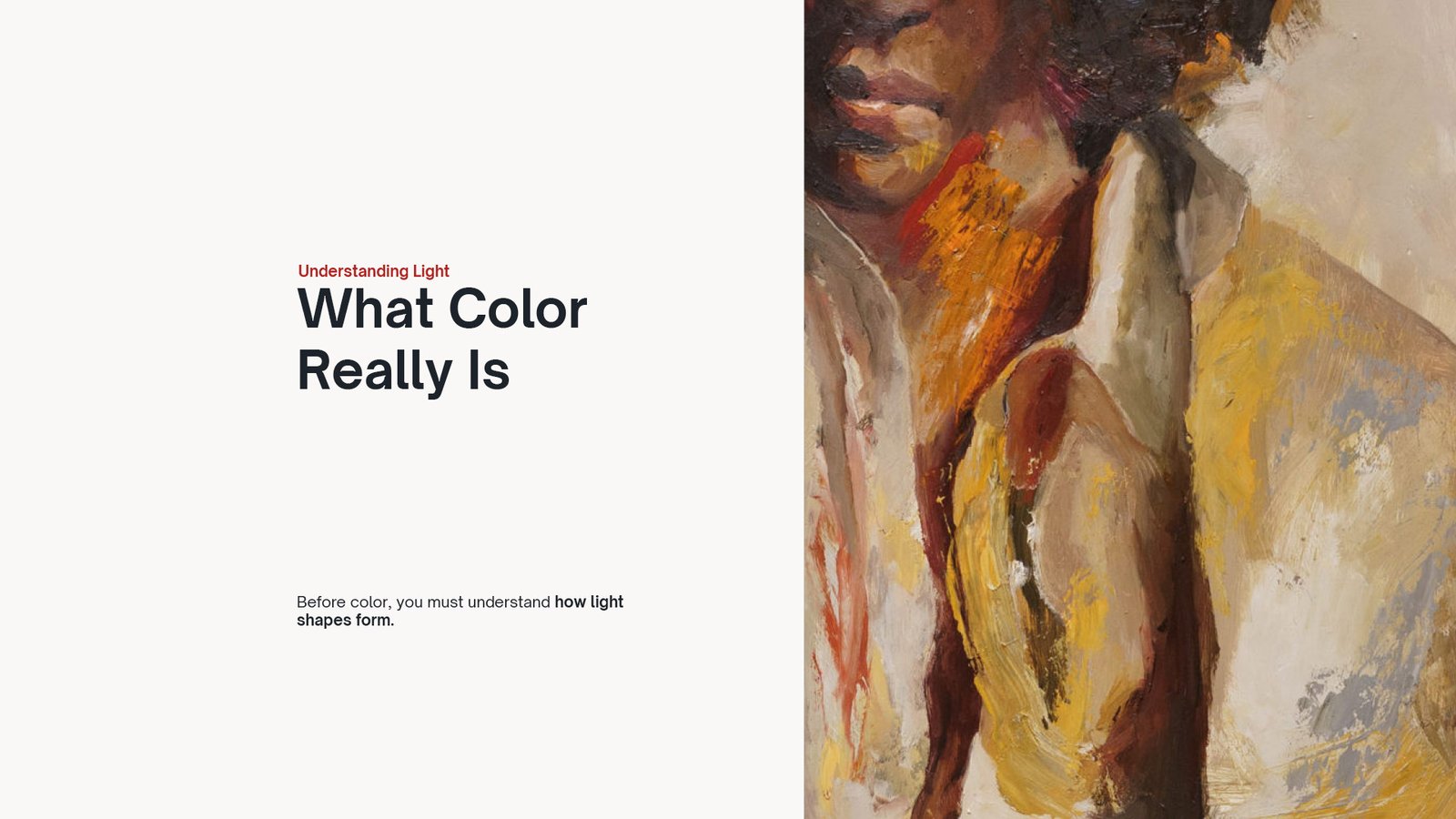
What Color Really Is - Part Two
What does it actually take to see color?
In this second part, we move into a more technical perspective and break down the three essential elements that must exist for color to appear. At first, it may feel like we’re stepping away from painting… but in reality, we’re getting closer to its core.
Because without light, there is no color. And without color, there is no painting.
Understanding these fundamentals will give you a deeper awareness of what you’re truly working with every time you pick up a brush.
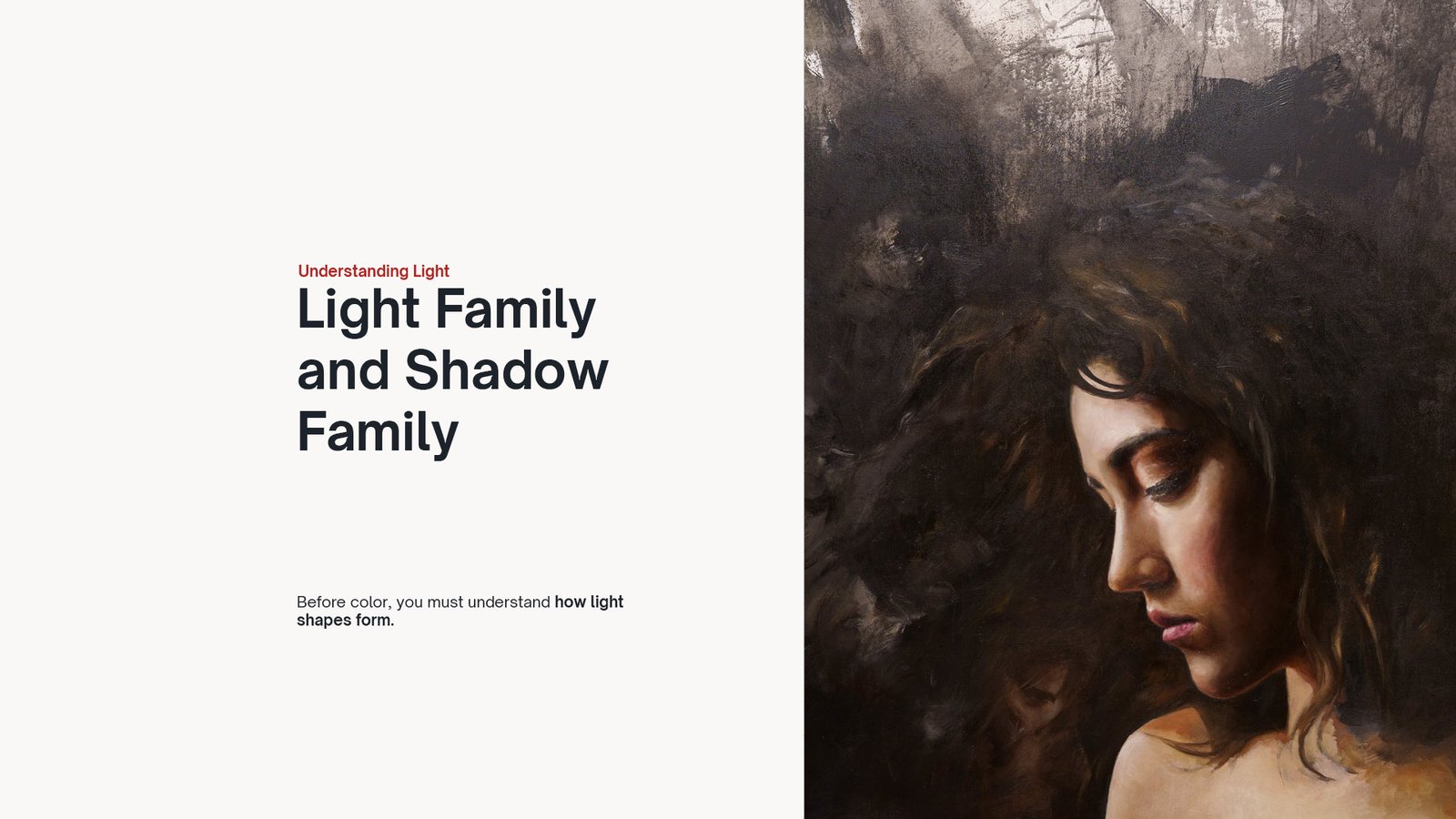
Light Family and Shadow Family
this lesson, we go deeper into one of the most essential structures in painting: the separation between light and shadow, and how shadows are actually built.
Understanding that there is a clear value division between light family and shadow family is only the beginning. Here, we break down what happens inside the shadow. Not all shadows are the same, and learning to recognize their internal structure will give you far more control over form, depth, and realism.
You’ll start to see how the core shadow defines the turning of the form, how form shadow describes the volume, how reflected light subtly reveals what’s hidden, and how cast shadows anchor your subject in space.
Some definitions to help you along the way
Value Division
The clear separation between the light family and the shadow family. All values in the light family are lighter than any value in the shadow family, with no overlap.
Core Shadow
The darkest part of the form shadow, located where the form turns away from the light. It marks the transition between light and shadow on the object.
Form Shadow
The area of shadow that describes the turning of the form. It is caused by the surface no longer receiving direct light.
Reflected Light
Light that bounces from surrounding surfaces back into the shadow side of the form, slightly illuminating it without breaking the overall shadow structure.
Cast Shadow
The shadow projected by an object onto another surface, caused by the blocking of light. It often has sharper edges closer to the object and softer edges as it moves away.
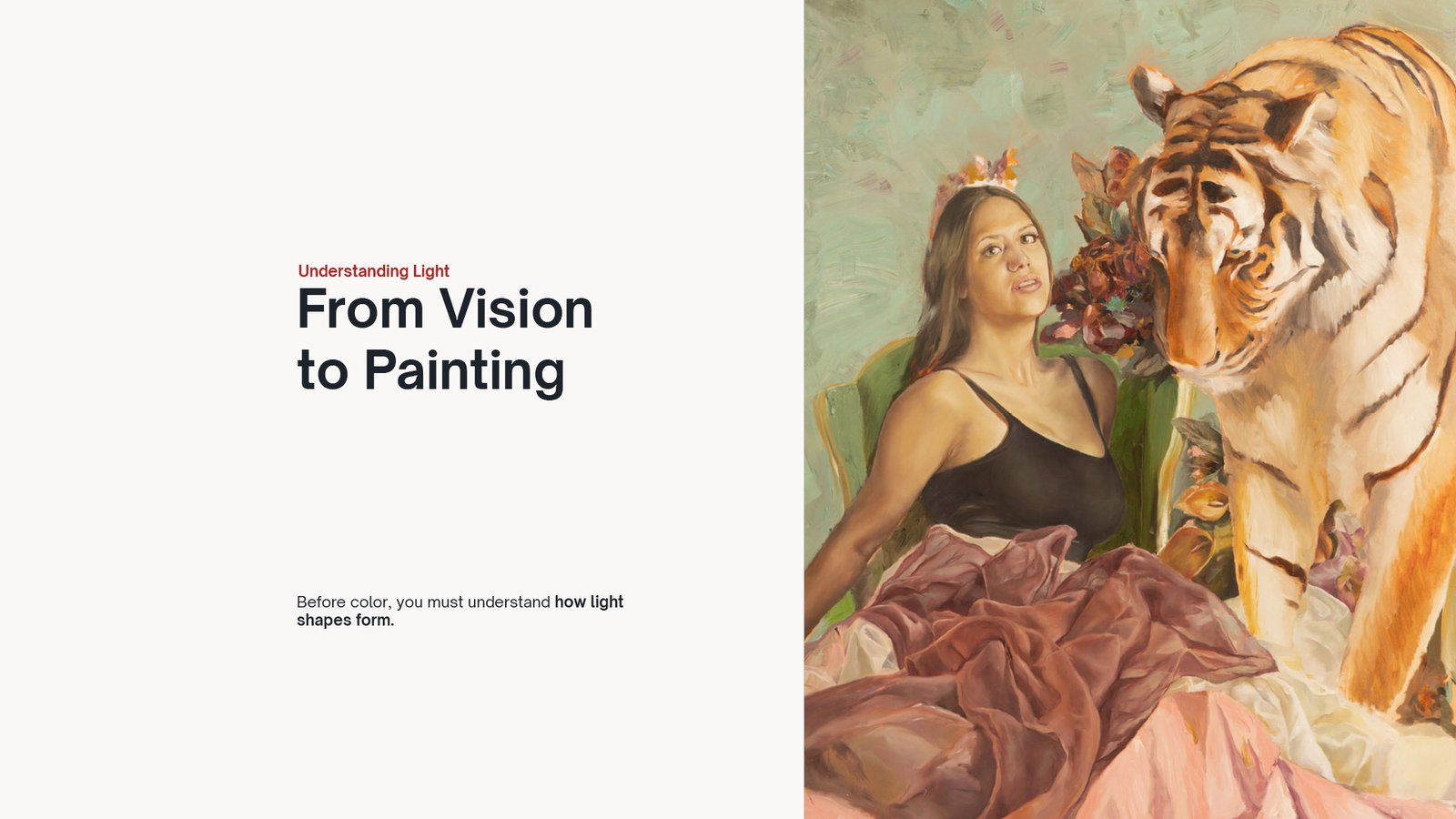
From Vision to Painting
Why is copying reality not the right approach, and what does an artist actually do with a concept?
In this video, we explore what truly matters while an artist is working.
So far, we’ve covered the anatomy of light and the experience of light.
Now the focus shifts toward practice, what a painter actually does with that knowledge.
This is where the concept becomes the final reality. A natural progression from theory into action.
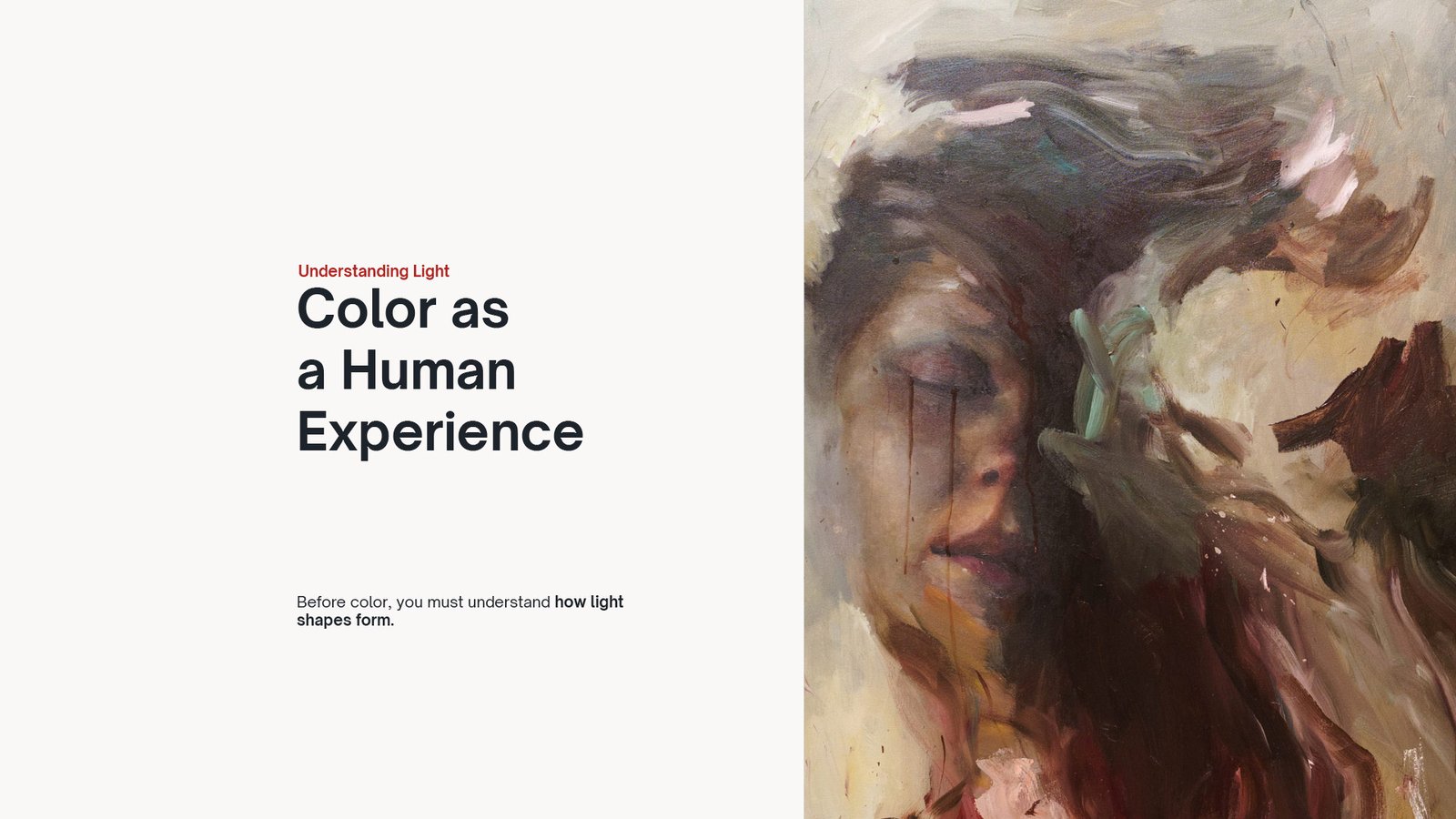
Color as a Human Experience
Do you know what the number one problem of a painter is while painting?
It’s not technique, not talent, and not even the materials
In this lesson, we begin to uncover how color shapes your perception in ways you might not be aware of, guiding your decisions, influencing your judgment, and sometimes misleading you entirely. Understanding this is the first step toward gaining real control over your work.
Because before you can paint what you see, you need to understand how you see.
Artworks referenced in this video
- Caravaggio – The Calling of Saint Matthew
- Claude Monet – Impression, Sunrise
- Jacques-Louis David – Napoleon Crossing the Alps
- Henri Matisse – The Green Stripe
Each of these works reveals how color is never neutral, it is always shaping the way we see and understand the image in front of us.
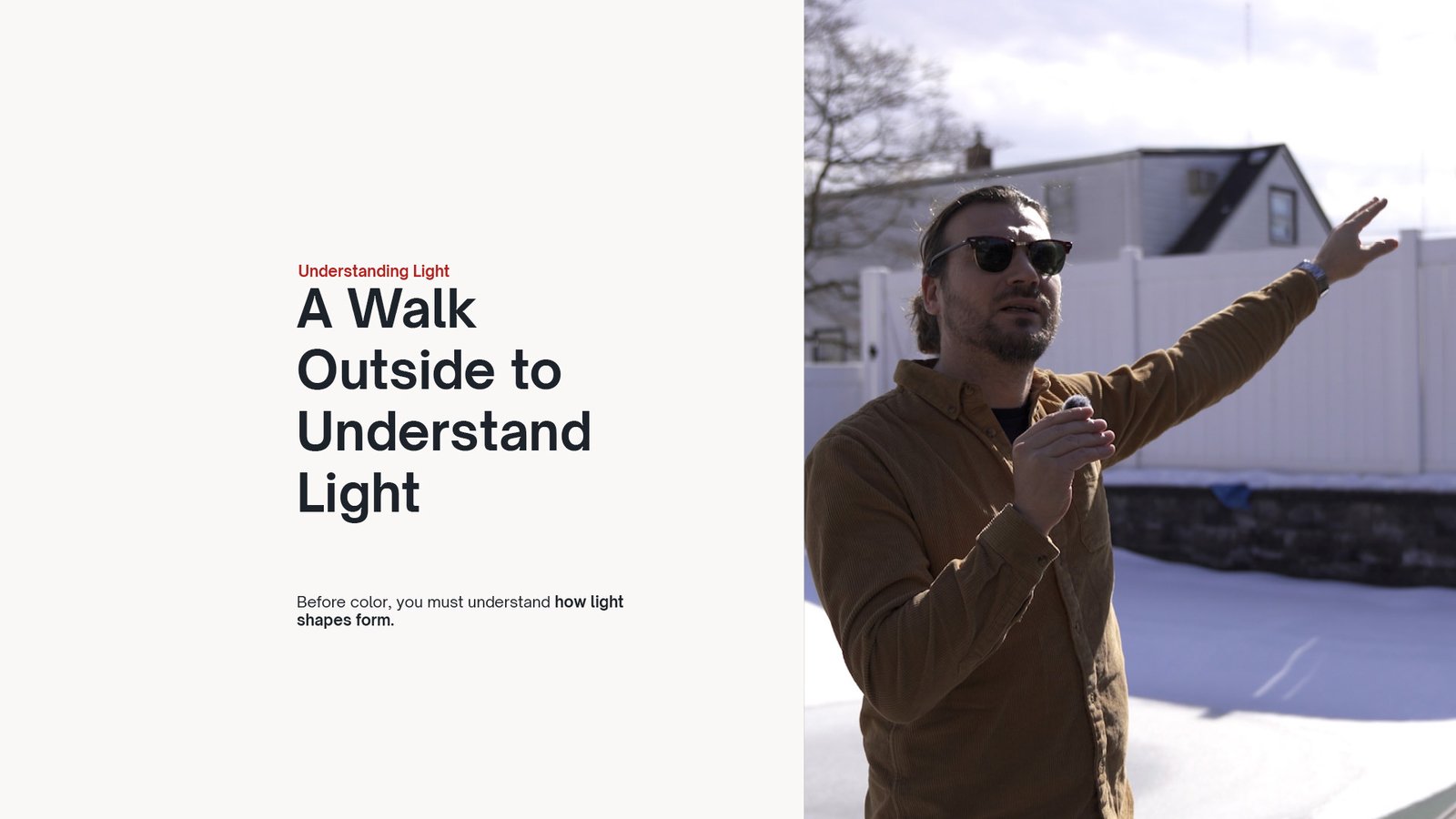
A Walk Outside to Understand Light
In this lesson, I invite you to step outside the studio with me. From the snowy streets of New York to the deserts surrounding Dubai, I’ve spent years observing light in all kinds of environments, capturing how it behaves, how it shifts, and how it transforms everything it touches.
When I look at a scene, I’m always asking the same questions. What color is the light? What color is the shadow? Where is the main source of light? How many sources are interacting at once? These are not abstract ideas, they are the foundation of every painting.
In this video, I want to guide you through that same way of seeing, so you can start analyzing your subject with clarity and intention, and turn observation into something you can actually use on the canvas.
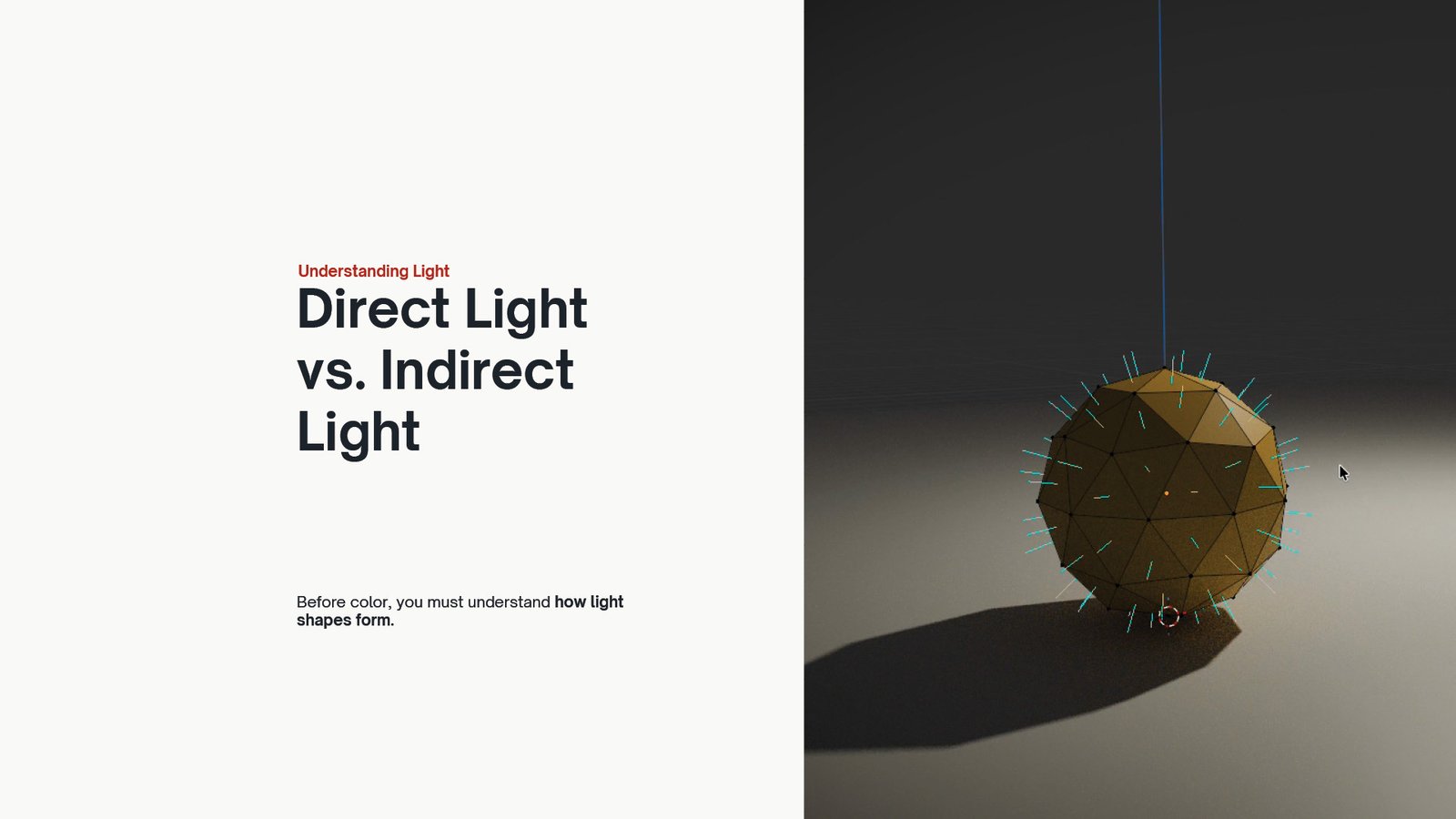
Direct Light vs. Indirect Light
This is one of those lessons that quietly changes everything.
Understanding the difference between direct and indirect light is not just a technical detail, it’s the foundation of how you interpret reality as a painter. Every surface, every form, every atmosphere you create depends on your ability to recognize where light comes from, how it behaves, and how it transforms once it interacts with the environment.
In this video, you’ll start to see light not as a generic illumination, but as a structured system. You’ll learn to distinguish its qualities, observe its effects, and most importantly, use that awareness to make clearer, more intentional decisions in your work.
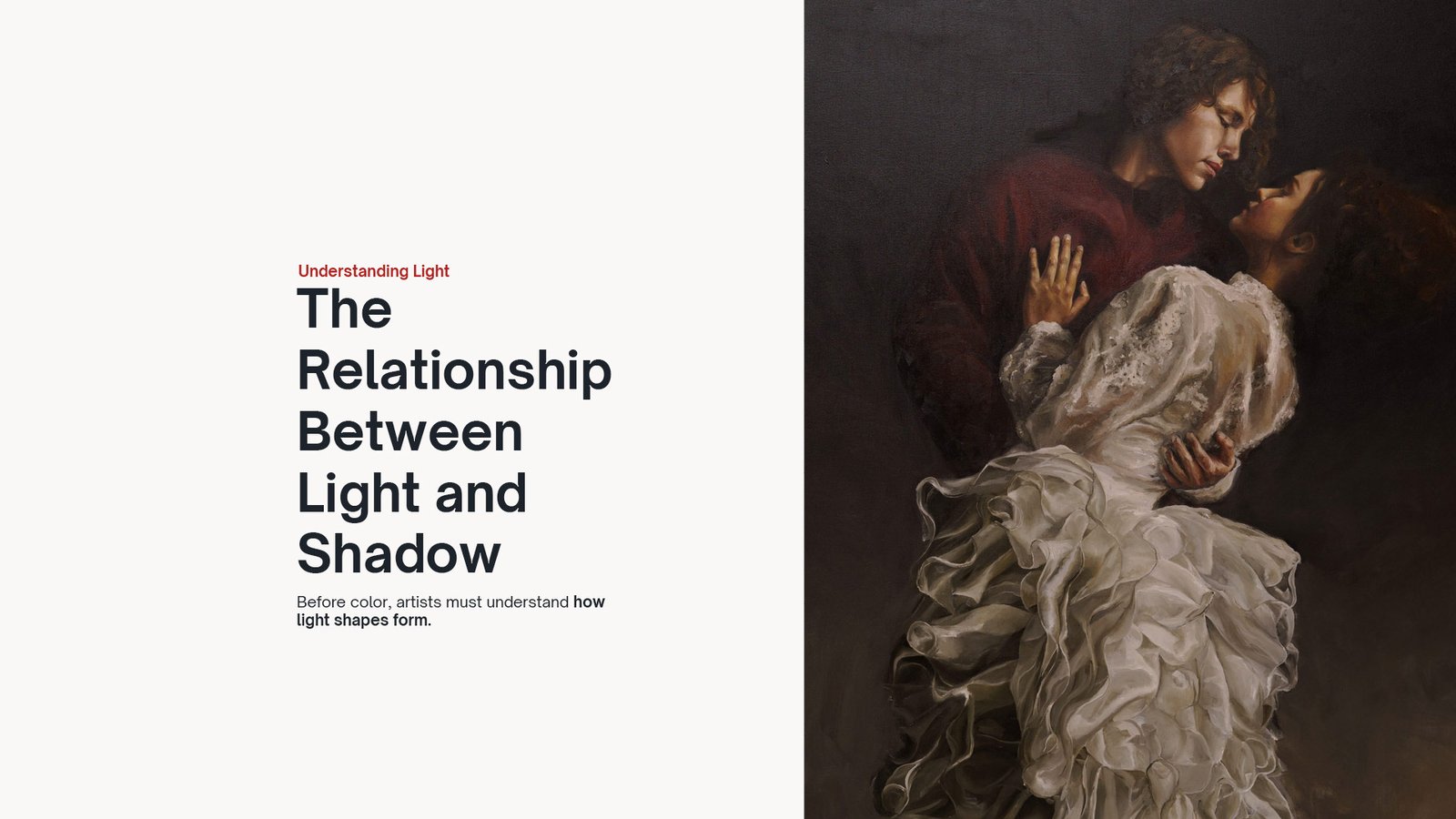
The relationship Between Light and Shadow
What actually creates realism?
Why does your eye keep tricking you while you paint?
What is the very first thing a painter should do when starting a painting?
This lesson brings you into one of the most essential structures in painting: the relationship between light and shadow.
You’ll begin to see beyond appearance, understand what truly organizes a subject, and move toward translating what you see into a clear and controlled painting.
Definitions:
The Value system
The value system is the ordered scale of lightness and darkness that artists use to organize and control the values in a painting.
Value
The quality by which we distinguish a light color from a dark one.
Shadow family
All the parts of your subject that are not reached by direct light.
These areas are generally darker in value and belong to the shadow side of the form.
Light family
All the parts of your subject that are directly or indirectly hit by light.
These areas are generally lighter in value and belong to the illuminated side of the form.
External links
https://lexicon.alexrighetto.com/art_term/shadow/