5 Things That Destroy an Artist
5 Things That Destroy an Artist
There are 5 things that can literally destroy an artist’s career.
Number 1: Artists are betrayed from the very beginning.
In almost every other industry, you learn the craft, develop your skills, and then apply them professionally.
A doctor studies medicine and practices medicine.
A dentist studies dentistry and becomes a dentist.
An engineer learns engineering and applies those principles.
Nobody expects them to reject what they learned in order to prove they are professionals.
Imagine an accountant saying:
“I don’t follow accounting rules because I want to be original.”
It would make no sense.
But in the art world, artists are often taught something completely different.
They are told that technique is academic.
That mastery is old-fashioned.
That to be a true artist, they must separate themselves from what they studied.
The trap begins at the very beginning.
Number 2: The myth that skill doesn’t matter.
A question that has confused the art world for decades:
“What makes an artist great?”
The answer is often unclear.
Sometimes recognition, reputation, and market attention become more important than the actual ability behind the work.
But without skill, what is the foundation of the artist?
Number 3: The obsession with dead artists.
Many collectors and institutions prefer to invest in artists who are no longer alive.
Major retrospectives often celebrate historical figures, while living artists struggle to receive the same attention.
The result?
Many artists become recognized only after they are gone.
Number 4: The false idea that true art should have no meaning.
A common belief is that art becomes more sophisticated when it removes narrative, emotion, and communication.
But throughout history, some of the greatest artworks had powerful ideas, stories, and human experiences behind them.
Meaning is not a weakness.
Number 5: Art becoming disconnected from the public.
When contemporary art becomes impossible for many people to understand, the audience doesn’t feel invited.
They feel excluded.
And when people stop connecting with art, they stop engaging with it.
Art has always been a conversation between the artist and society.
Without that connection, something important is lost.
The solution?
Artists need both:
Mastery of the craft.
And an understanding of the world around them.
Because talent alone is not enough.
The art world is a very particular industry. And every artist who enters this world, often without realizing it, ends up facing many of the same situations.
Identifying the critical elements and pain points of this industry can make it much easier to understand how it actually works, allowing artists to take them into account when developing their own strategy.
In particular, there are five situations that, in my opinion, simply make no sense. In this post, or video post, I want to point them out.
Number 1: Artists are betrayed from the very beginning.
The first point is also the hardest one to digest.
How is it possible that in an industry like this, anyone who spends ten or fifteen years of their life learning the craft eventually enters the professional world only to feel completely betrayed by it?
You are told that originality matters. That you have to think outside the box. That you have to be unique.
And yet, at the same time, your work has to be recognizable. A collector needs to be able to look at a painting and identify it as yours.
Number 2: The myth that skill doesn’t matter.
The second point is equally interesting.
Have you ever stopped to ask yourself what makes an artist great? What makes one artist important, while another is not? Is it fame? Or is it the ability to represent life?
These are all interesting questions.
Lately, one of the most sophisticated currents of contemporary art has been promoting the idea that an artist doesn’t necessarily need to be skilled, or to possess greater skills than others.
And this is where I disagree.
Because if skill is no longer part of the equation, what criteria are we left with to evaluate an artist?
Of course, the message that the artwork conveys intrinsically has to be just as important as the medium itself. But without these two elements working together, the audience is left in complete confusion.
Number 3: The obsession with dead artists.
As a living contemporary artist, I have some objections to the fact that the biggest sales in the art market are so often made in the names of artists who are already dead.
Maybe I’m too biased, but I believe there should be a few more multimillion-dollar sales happening for living artists too. There are simply far too few of them compared to the historical classics, Old Masters, and Modern artists whose works regularly sell for millions at auction.
Maybe I’m being a little sarcastic here, but I would really like to see collectors engage much more with living artists as well.
Maybe that’s just my pet peeve.
Number 4: The false idea that true art should have no meaning.
Unfortunately, some people have started to identify modern and contemporary art as the ultimate temple of art without a message and without a purpose.
I see it differently.
I think of art as something that transcends individual forms of expression: photography, painting, cinema, dance, and many others. Art is art, and these different forms probably borrow from one another and share certain rules of communication and operation.
It is true that there are songs or pieces of music where the lyrics aren’t completely clear. It’s also true that there are silent films made entirely of images.
But who would want to watch a ninety-minute film with no meaning whatsoever, just a series of images placed next to one another, while the entire emotional and analytical burden is left to the viewer?
At some point, it would become torture rather than entertainment, right?
Number 5: Art becoming disconnected from the public.
The last point is perhaps a consequence of point four.
At some point, it is the audience that decides. It is the masses that determine what is important and what is not.
Is this the best way to evaluate art? Probably not. But in some ways, it may also be the most democratic.
People from every social background and every cultural environment have the power to decide whether something has value or not. And I believe this is one of the great strengths of art: you don’t have to be an expert or an art critic to have an opinion about it.
If we take that possibility away from the general public, then the art world is left in the hands of critics. Only critics become the ones holding the keys to interpreting and accessing contemporary art.
And I don’t think that’s right.
I have enormous respect for the world of critics and for the museum world. But I believe that every person, regardless of their level of education or expertise, should have the freedom to say, “This left something with me,” or simply, “I like this,” without having to rely on an expert to validate that feeling.

The Secret of Realistic Painting
This article is primarily intended for artists who want to work in figurative art and improve their ability to represent the human figure, particularly in portraiture.
Portraiture, as well as the nude, has long been one of the fundamental areas in which artists throughout history have challenged themselves. These fields are incredibly rich in detail, knowledge, and technical advancements. It is therefore no surprise that some artists have reached such an extraordinary level of mastery that their work can seem almost impossible to match.
So, where should we begin? How can we develop a greater ability to represent the human form? How can we make our portraits feel more lifelike, more convincing, more realistic?
That is what I explore in this article.
What Matter More Than Details in Realistic Painting
If you think it’s the details that make the difference in a realistic painting, you might want to reconsider.
In reality, what truly makes the difference in a painting are the values. They are what create the illusion of three-dimensionality.
Because, ultimately, realism is simply the correct translation of a three-dimensional world into a two-dimensional one, which is the canvas.
And perspective, together with the variation of light that creates the illusion of depth, is the real work of the artist.
So, regardless of color and saturation, the first approach should be about values.
Therefore, one of the most basic pieces of information about painting, and one of the most fundamental concepts, is value.
One of the most challenging exercises that you will have to face is understanding, capturing, and rendering the correct values.
What Is Value in Art?
I have a complete dictionary entry for this word, but in a few words, value represents the relative lightness or darkness of a color or an area within an image.
Value represents the relative lightness or darkness of a color or an area within an image.
As I mentioned before, value is what allows us to represent form, which means the three-dimensional structure of a figure.
Do you understand now why this is one of the most important aspects of painting?
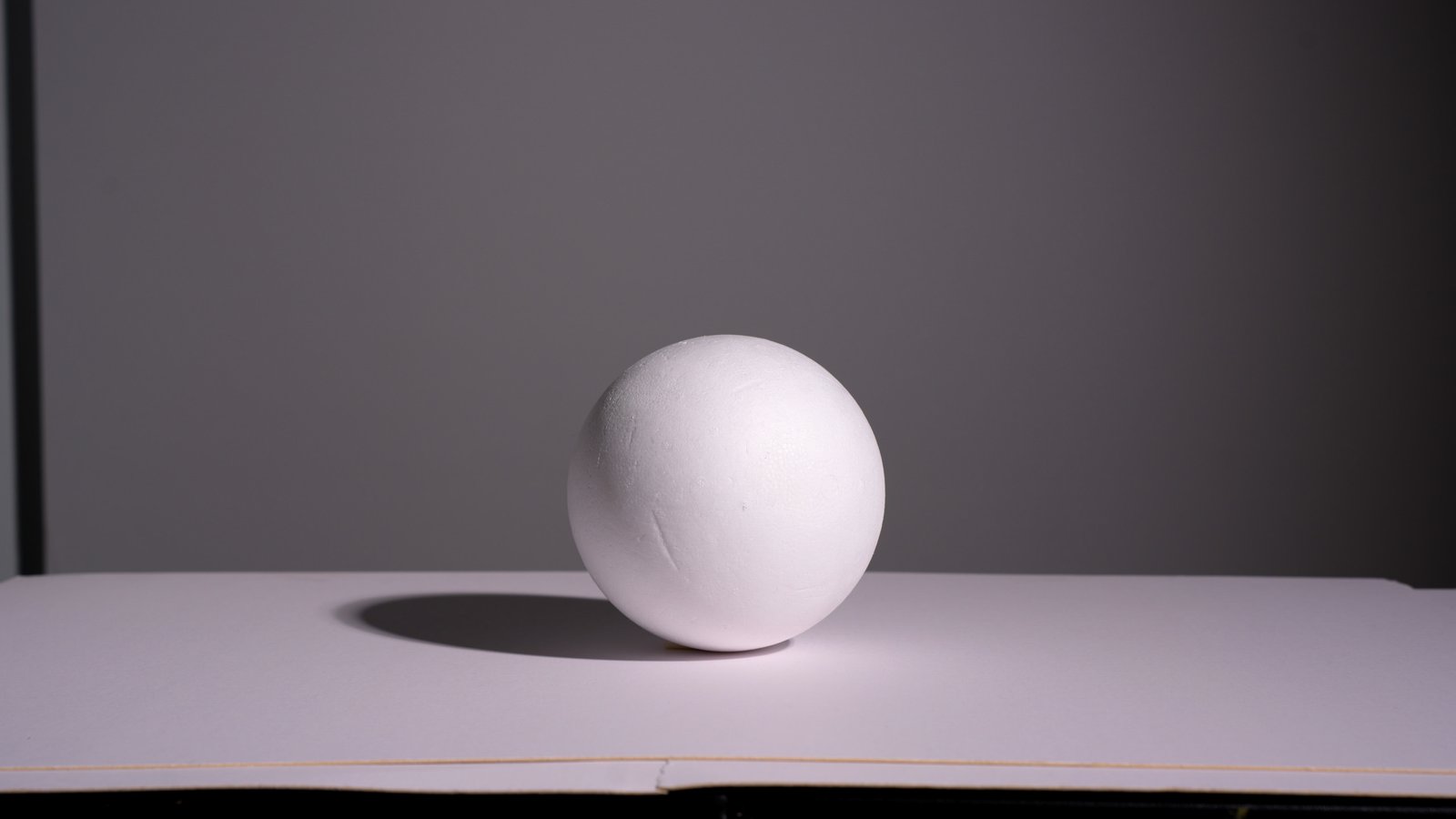
Because without value, you don’t have three-dimensional form. Without three-dimensional form, you don’t have realism. Without realism, your image, your painting, your portrait, or your figure can appear flat or incorrect.
We’re so used to perceiving values that our visual system is extremely sensitive to them. We instantly feel whether an image looks right or wrong based on the organization and accuracy of the values within the picture we are creating.
The Value Finder
Now that you understand the importance of value, it’s time to put it into practice.
I created this tool to help myself identify the correct values, and it is based on the Munsell system.
Now, I have an entire online course on the structure of color, so you can check out the course here. But I can give you some basic information.
This tool helps identify the relative degrees of light and dark, making it easier to understand and paint form.
You use it by taking a wooden stick and priming it with some gesso. Then, you divide it into 11 little squares. Those squares represent the values from pure black to pure white, where pure black is 0 and pure white is 10. This is the Munsell value scale.
You use this stick by squinting your eyes and comparing it with any color or area of your painting to identify its correct value.
Because one thing that I didn’t mention is that value and hue are two different attributes of color.
Every chromatic color has a hue, and hue refers to the color family, such as red, purple, yellow, green, and so forth.
So, when you squint your eyes, you can identify the value of a color regardless of its hue. This allows you to easily detect if you are moving in the wrong direction or if you have achieved the correct value relationship.
This is how simple this tool is.
I hope this helps. Let me know, and obviously, you can subscribe to my newsletter to receive these perks and free lessons directly in your email every week.
Stop Guessing Colors: The Formula That Changes How You Mix Paint
The goal of this article is simple: to help you gain more control and confidence when mixing and creating colors in your paintings.
This Procedure works for both Oil Colors and Acrylics!
Many artists, especially in the early stages of their journey, run into the same problem: mixing colors accurately.
With thousands of paints available in stores, I completely understand the confusion (and the frustration). If you’ve ever ended up with a palette full of dull, muddy, or simply “wrong” colors, you know exactly what I mean.
The good news is that this isn’t a lack of talent: it’s usually the result of an unstructured approach to color mixing. The internet is an amazing place: endless videos, endless artists, each with their own method… but is there a simple, reliable system?
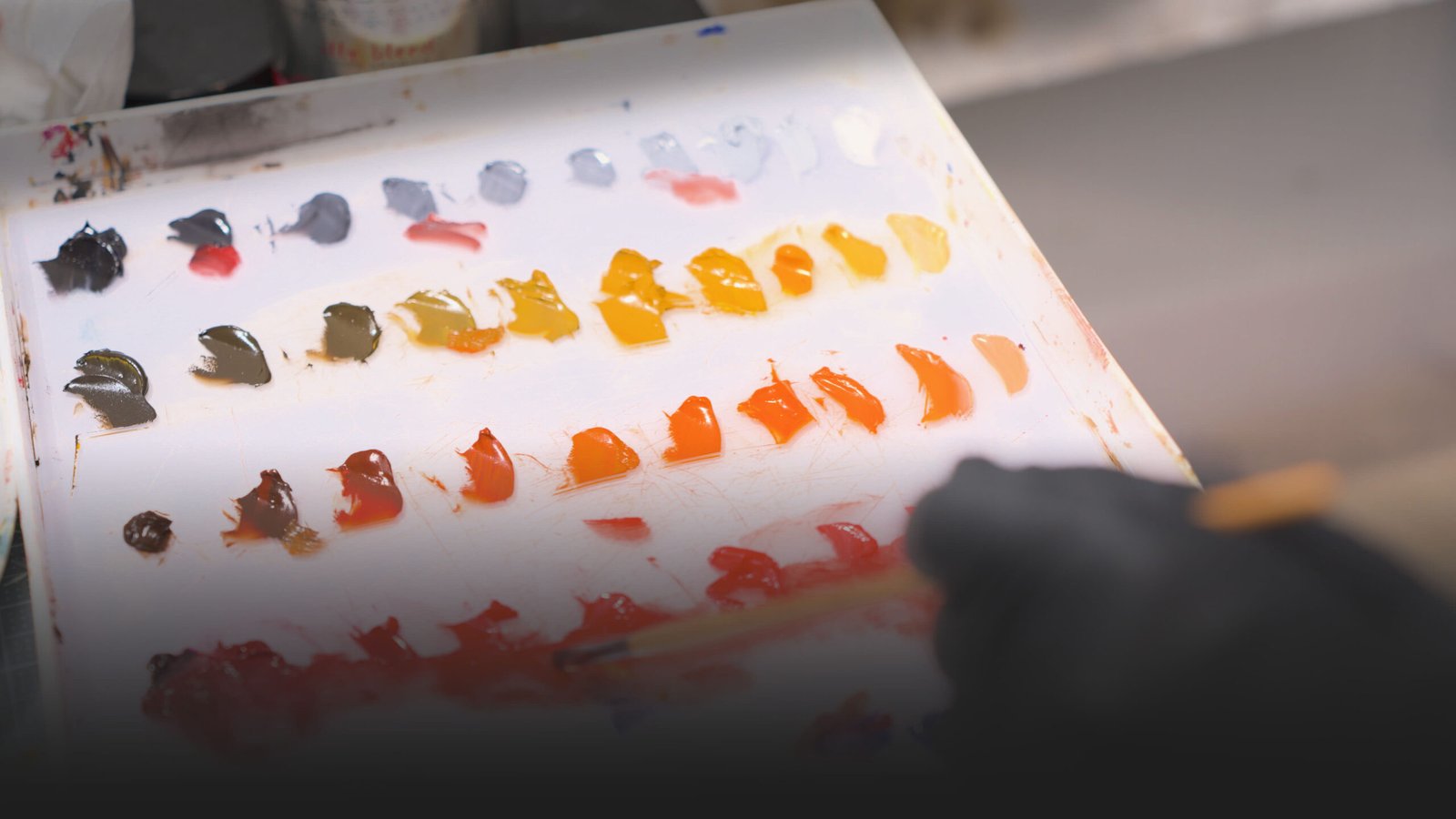
Today I want to share a method that gives you much more control over color: separating the process into two distinct phases: value and color (hue and chroma).
Why Colors Become Muddy
Unlike light, which combines additively to produce white, pigments behave in a subtractive way. Each color absorbs certain wavelengths of light and reflects only what remains.
When we mix two pigments, each one absorbs certain parts of the light spectrum. In the mixture, these absorption patterns combine, so even more wavelengths of light get absorbed before anything reaches our eyes. As a result, less light is reflected overall, and the color often loses brightness and saturation, appearing more muted or gray. This is why mixes that seem logical on paper can sometimes end up looking dull in practice.
In painting, we also cannot reproduce the intensity of natural light. For this reason, much of our work revolves around building a range of colored grays, balancing warm and cool variations to create depth and realism.
The Separation Method: Value First, Color After
The core idea is simple: instead of chasing the final color immediately, we separate the process into value and chroma.
1. Establish the Value
The first step is to create a neutral gray that matches the brightness of the color you want to achieve.
Using white and black, you define the correct level of lightness. This gray becomes your reference point and ensures consistency throughout the process.
A key principle emerges immediately:
if the value is wrong, the color will almost never look right.
2. Align the Hue
Next, you mix the target color, for example, combining red and yellow to create a warm orange base often used in skin tones.
Then you adjust it until it matches the same value as the gray you prepared earlier.
In practice, both mixtures must share identical brightness.
3. Control the Saturation
Now comes the most interesting part.
When you mix the gray with the color, the value stays stable because both start from the same brightness level. The only variable that changes is saturation.
This gives you the ability to increase or reduce chroma without disturbing the tonal structure of the painting.
The result is far more precise and predictable color control.
The Secret of Realistic Portraits
When we look at a face, we perceive many subtle color shifts: yellow on the forehead, red on the cheeks, violet tones around the jaw or in the shadows.
Many painters focus too much on these chromatic differences, forgetting that what truly builds form is the relationship between values.
For this reason, this method simplifies portrait painting into five main value groups:
- Main light
- Light midtone
- Dark midtone
- Shadow mass
- Dark accents
Once these levels are established, each area can be colored while maintaining a strong tonal structure.
The Importance of Colored Grays
One of the most powerful insights is that the most compelling painting effects rarely come from pure, saturated colors.
True visual richness comes from subtle variations between warm and cool tones, slightly desaturated colors, and controlled accents.
These “colored grays” are what create volume, depth, and realism.
A realistic skin tone is a complex network of temperature shifts constantly balancing each other.
For this reason, this method simplifies portrait painting into five main value groups:
- Main light
- Light midtone
- Dark midtone
- Shadow mass
- Dark accents
Once these levels are established, each area can be colored while maintaining a strong tonal structure.
I hope you enjoyed this article. Feel free to drop any questions in the comments below.